


FoodLog: IBS & FODMAP Tracker
4.337.00 Reviews
App Specs
- Version
- 6.3.0
- Updated On
- License
- Free
- Downloads
- 50,000+
- Developer
- LogFor.Life
- Categories
- Food & Drink
- Platform
- Android
Screenshots
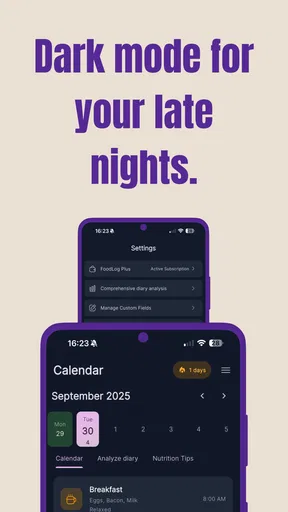
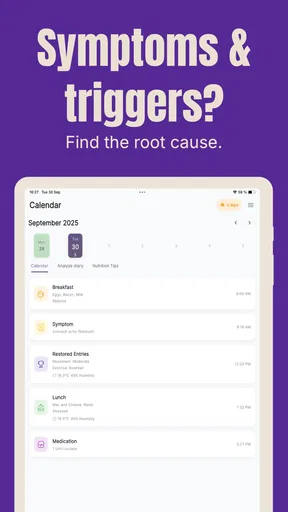
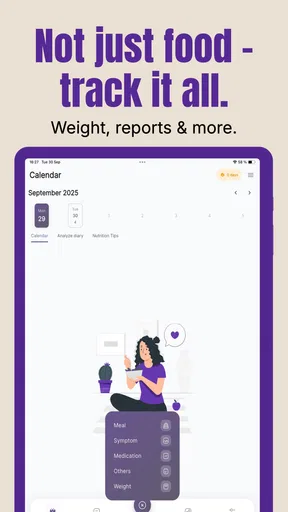
 Analysis by AppCompare
FoodLog: IBS & FODMAP Tracker is your new best buddy if you’re navigating the tricky waters of managing IBS and keeping tabs on a low FODMAP diet. I’ve been using this app for a few weeks now, and let me tell you, it’s been a game-changer.
Getting Started with FoodLog
First things first, downloading the app was a breeze. Available on both Android and iOS, the installation was quick, and I was up and running in no time. Once you launch the app, you’re greeted with a clean and intuitive interface, which makes it super easy to dive right in.
The initial setup requires you to input some details about your dietary preferences and any specific IBS triggers you’re aware of. This step is crucial as it customizes your experience and tailors the recommendations to your needs. It’s like having a personal dietitian right in your pocket!
What to Expect from the Tracker
FoodLog is a free food and drink app from LogFor.Life, aimed at people who want to connect what they eat with how they feel. It has a 4.3 average from around 440 ratings, and over 50,000 installs, so it has found an audience among people looking for a more structured way to understand digestive patterns. It is rated for Everyone, while in-app purchases range from $2.99 to $64.99 per item. The current version is 6.1.2, and it requires Android 8.0 or later.
For a first-time user, the important thing is to approach it as a record-keeping aid rather than a source of instant answers. A food entry is one observation, not proof that an ingredient caused a symptom. IBS can fluctuate for many reasons, and timing, portion size, stress, sleep, and routine can all complicate the picture. I find the app most useful when I use it to spot questions worth exploring, rather than treating a pattern as a diagnosis.
That distinction also helps set expectations around the FODMAP guidance. A quick indication can make a food choice feel less uncertain, but it should not replace medical advice or a dietitian’s help, especially if you are starting an elimination plan or have other health concerns. The app is best suited to making your own notes more consistent and easier to review.
First Setup: Keep the Log Manageable
The initial setup requires you to input some details about your dietary preferences and any specific IBS triggers you’re aware of. This step is crucial as it customizes your experience and tailors the recommendations to your needs. It’s like having a personal dietitian right in your pocket!
Worth Reading Before You Choose

EA SPORTS FC Mobile 26 Is a Bigger Football Game, but It Takes Time

Flipboard Shows What News Apps Must Do Beyond the Feed

Switching to Android Auto Means Rethinking Your Driving Routine

Google Calendar Makes a Crowded Week Easier to Manage

Ludo King Makes the Most of the Minutes Between Plans

Baby Panda World Brings Quick Play to Modern Phones, but Its Game Library Feels Busy
I’d keep those starting details simple and honest. If you are not sure whether a food is a trigger, don’t label it as one just to complete a profile; uncertainty is useful information too. You can begin with foods you regularly eat and symptoms you already recognize, then add nuance as you go. That gives you a baseline without turning setup into a quiz you have to get perfectly right.
It is also worth deciding what you want to learn before logging everything. Maybe you want to see whether symptoms tend to follow lunch, whether a familiar packaged snack is worth checking, or whether a suspected ingredient appears in several meals. A narrow question makes entries more useful and can prevent the diary from feeling like another chore.
Tracking Your Food
This is where FoodLog really shines. The food diary feature allows you to log every meal with impressive detail. You can either search through their extensive database of foods or input your own custom meals. I particularly love the barcode scanner feature, which makes entering packaged foods a total breeze.
Each entry is analyzed for FODMAP content, and the app gives you instant feedback on whether your meal is safe for your IBS. I found this feature incredibly reassuring, especially when trying new foods.
A practical habit is to enter meals close to when you eat them instead of trying to reconstruct the whole day at night. When a dish has several ingredients, a custom meal entry can be more informative than recording only a broad label such as “lunch.” If you eat that meal again, the saved entry can also make repeat logging less tedious. For packaged items, scanning can speed things up, but I would still check that the selected result matches the product in your hand before relying on it.
One trade-off is that a detailed diary asks for consistency. If you record only the days when symptoms are bad, the picture can become skewed; ordinary, comfortable days matter because they give you a comparison. On the other hand, you do not need to write a perfect food history from day one. A few reliably recorded meals and symptoms are more useful than an ambitious routine that you abandon after a week.
First Meaningful Action: Log One Meal and One Symptom
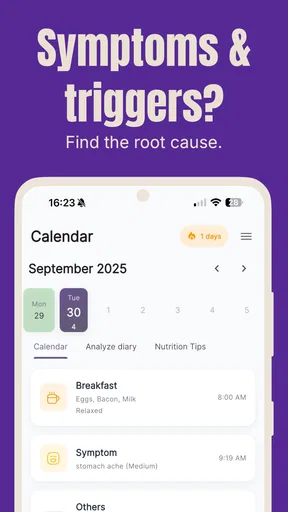
My suggested first success is deliberately small: log a meal you know well, then add a symptom if one occurs and note when it started. That creates a starting point without asking you to overhaul your diet. If nothing happens after the meal, that is still a useful entry; it helps distinguish foods you tolerate routinely from foods you only suspect.
Imagine having breakfast before work, grabbing a packaged snack in the afternoon, and noticing discomfort later in the day. Rather than immediately blaming the snack, you can record both eating occasions and the symptom with its timing. Repeating that kind of careful note across ordinary days gives you something more dependable to discuss with a clinician than a vague memory of “something I ate.”
Try to keep descriptions consistent. If you call the same discomfort “cramping” one day and “stomach pain” another, later comparisons may be harder to interpret. You do not need clinical language; using the same everyday terms and a similar level of detail is enough to make your own history clearer.
Symptom Monitoring
We all know how unpredictable IBS symptoms can be. FoodLog helps you stay on top of things by letting you log any symptoms you experience throughout the day. The app then correlates your symptoms with your food intake, providing insights into potential triggers.
This feature has helped me identify a few unexpected culprits in my diet, and I’ve been able to make informed decisions about what to avoid in the future. The trend analysis is particularly helpful, offering a visual representation of your triggers over time.
When reviewing a trend, I would look for repetition rather than reacting to one striking day. A food appearing before several similar episodes may deserve a closer look, but it still does not prove cause and effect. Keep other routine changes in mind, and avoid cutting out several foods at once if you want to learn which change actually matters. If a pattern seems important, it can be a useful prompt for a conversation with a healthcare professional.
For appointments, a concise log can be more useful than a long list of guesses. Review a short stretch of entries beforehand and note what you are trying to understand: the food, the timing, and the symptom pattern. That turns the tracker into a practical memory aid without implying that the app can diagnose IBS or prescribe a treatment.
Common Confusion and Everyday Limits
The word “safe” can sound more absolute than any food-tracking tool can justify. Individual tolerance varies, and the amount eaten may matter as much as the ingredient. I treat an app’s food guidance as a starting point for checking a choice, not a promise about how my body will respond. If your reaction conflicts with an indication on screen, your own experience and professional guidance deserve attention.
There is also a difference between identifying a food and identifying a meal. A mixed dish may contain several ingredients, and a symptom later in the day may not point neatly to just one of them. This is where custom entries and consistent notes can help, but it also shows why quick correlations should be read cautiously. The app can organize observations; it cannot remove the ambiguity from a complicated day.
FoodLog is not the right fit for someone who wants a hands-off solution, dislikes recording meals, or expects the app to tell them exactly what to eat. A simple notes app may be enough if you only need occasional reminders, while a clinician or registered dietitian is a better option for personalized medical nutrition support. I would also avoid using a tracker to justify a very restrictive diet without guidance.
Recipes and Recommendations
On days when I’m feeling uninspired, the recipe section is a lifesaver. FoodLog offers a variety of low FODMAP recipes that are both delicious and easy to prepare. Each recipe is accompanied by nutritional information and FODMAP ratings, ensuring you’re always in the know.
The app also provides personalized recommendations based on your logging habits and symptom history. It’s like having a coach that learns and adapts to your unique needs.
For a new user, recipes can be most helpful when used as meal ideas rather than strict rules. I would choose one that fits the ingredients I already tolerate, then record how the meal goes instead of changing several parts of my diet at once. That keeps cooking practical and makes the resulting log easier to understand. Recommendations may help you notice what to explore next, but I would still judge them against your own experience and any advice you have received.
Compared with a generic recipe collection, the appeal here is the connection to food and symptom tracking. Compared with a plain spreadsheet or notes app, the structure and food-focused tools can reduce some manual work. The trade-off is that a dedicated tracker asks you to use its logging approach; if you prefer to build your own categories or record only a few details, a basic notes tool may feel more flexible.
Community and Support
One of the unexpected perks of FoodLog is its community feature. You can connect with other users who are also managing IBS, share tips, and offer support. It’s a comforting reminder that you’re not alone on this journey.
The support team behind the app is responsive and helpful too. Whether you have questions about the app’s features or need advice on managing your diet, they’re just a message away.
Community advice can make a difficult routine feel less isolating, but personal stories are not a substitute for individualized care. A food that works well for another person may not suit you, and shared suggestions should not override medical guidance. I would use the community for encouragement and practical ideas, while keeping decisions about significant dietary changes grounded in reliable professional advice.
Who Will Get the Most from It?
I think FoodLog makes the most sense for someone who is beginning to track meals and symptoms, wants help organizing a food diary, or is preparing to discuss recurring patterns with a professional. It can also suit someone who already knows a few suspected triggers but wants to check whether those suspicions hold up across normal routines. The key is being willing to make regular, modest entries rather than expecting the app to do the thinking for you.
If your main goal is simply to count calories, plan general meals, or save recipes without connecting them to symptoms, a standard nutrition or recipe app may be a better match. FoodLog’s value is its focus on digestive observations; that focus may feel unnecessary if you do not need to track that relationship. And if logging makes you anxious or encourages you to avoid more and more foods, pause and seek guidance rather than pushing through for the sake of a complete diary.
Final Thoughts
Overall, I’ve been thoroughly impressed with what FoodLog: IBS & FODMAP Tracker has to offer. It’s more than just an app; it’s a comprehensive tool that supports and empowers individuals managing IBS. The combination of food logging, symptom tracking, and personalized recommendations makes it an invaluable resource.
If you’re struggling to keep your IBS in check or just starting on a low FODMAP journey, give FoodLog a try. It might just be the companion you’ve been looking for on your health journey.
Pros
- User-friendly interface for easy tracking.
- Customizable reminders for meal logging.
- Comprehensive food database included.
- Tracks symptoms and mood effectively.
- Offers personalized dietary insights.
Cons
- Limited free version features.
- Occasional app crashes reported.
- Subscription required for advanced tools.
- Some users find data entry time-consuming.
- No direct integration with fitness apps.
FAQs for FoodLog: IBS & FODMAP Tracker
What is FoodLog: IBS & FODMAP Tracker and how does it work?
FoodLog is a specialized app designed to help individuals manage their IBS symptoms by tracking their food intake and identifying FODMAPs. Users log meals, and the app provides insights into potential triggers. It offers a comprehensive database of foods and their FODMAP levels, allowing for personalized analysis and symptom tracking.
Is FoodLog suitable for all dietary restrictions and preferences?
Yes, FoodLog caters to a wide range of dietary needs. Whether you're vegan, gluten-free, or have specific allergies, the app allows you to customize your food diary and preferences. Its extensive food database includes various dietary options, making it versatile for any lifestyle or restriction.
How accurate is the FODMAP information in FoodLog?
FoodLog uses up-to-date, research-based data on FODMAP levels in foods, compiled from reputable sources. While the app strives for accuracy, it's important to note that individual responses can vary, and consulting with a healthcare professional is recommended for personalized advice.
Can FoodLog help me track symptoms and identify patterns over time?
Absolutely. FoodLog not only tracks your meals but also allows you to log symptoms and their severity. Over time, the app analyzes your data to identify patterns and potential food triggers, providing valuable insights to help manage your IBS more effectively.
Is FoodLog user-friendly for those new to food tracking apps?
Yes, FoodLog is designed with user experience in mind. Its intuitive interface and step-by-step guides make it easy for beginners to navigate. The app includes helpful tutorials and customer support to assist users in getting the most out of its features.


